

What is a Wisdom Tooth?
When we talk about dental health, we often think of issues like tooth decay, gum disease, or tartar removal. However, there’s one condition that most people experience at some point in their lives, sometimes silently progressing and sometimes manifesting as excruciating pain: wisdom teeth.
These teeth, which usually begin to erupt in adolescence, between the ages of 17 and 25, are a natural part of our oral structure. However, their “natural” nature doesn’t always mean they’re problem-free. Depending on the structure of the jawbone, the alignment of the teeth, and genetic factors that vary from person to person, wisdom teeth can sometimes erupt unnoticed, while other times they can cause discomfort such as severe pain, swelling, and jaw locking.
Many people don’t fully grasp the pain of their wisdom teeth when they first experience it. During this period, as the tooth struggles to find its place, it feels as if there’s pressure on the back of the jaw. Some people overcome this period with only mild pain, while others can develop serious problems due to gum infection, inflammation of the jawbone, or pressure on adjacent teeth.
Wisdom teeth are actually a reflection of evolution. While these teeth were essential due to our ancestors’ wider jaws and strict eating habits, today, many people find themselves unable to fully accommodate them due to the narrowness of their jaws. This leads to the emergence of impacted wisdom teeth.
What are Wisdom Teeth?
Wisdom teeth are the last teeth to appear in the mouth and are often known as “latecomers.” Because they usually begin to erupt between the ages of 17 and 25, they are commonly known as “wisdom teeth.” In dentistry, these teeth are known as “third molars.”
An adult normally has 32 teeth, four of which are wisdom teeth: two in the upper jaw and two in the lower jaw. However, not everyone’s oral structure is the same. Some people have a jaw structure that allows them to emerge, while others have a narrow jawbone, preventing them from finding room. In these cases, the teeth can remain “impacted,” or remain silently within the jaw without ever forming.
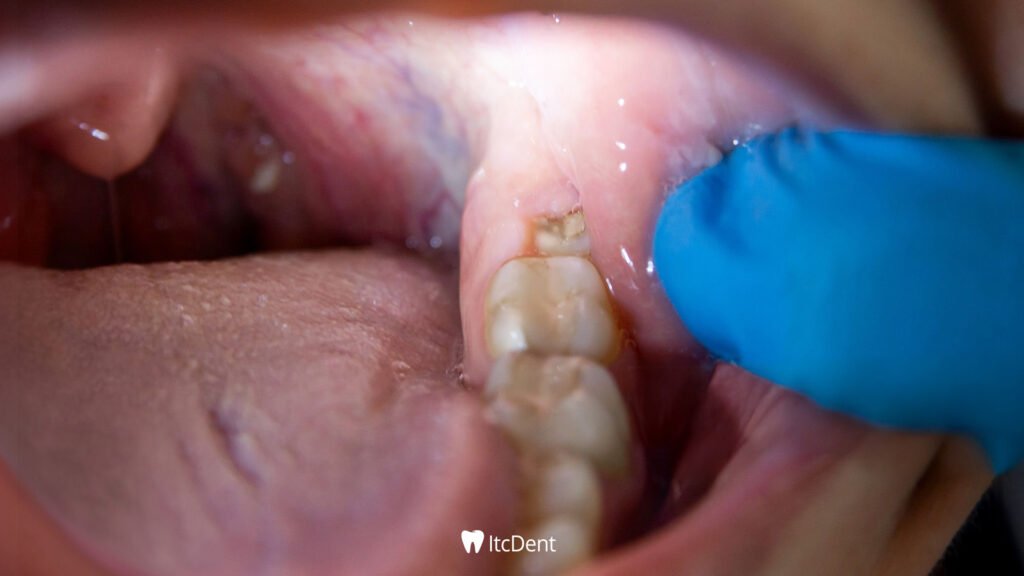
While some people lose their wisdom teeth without even realizing it, for others, the process can be quite painful. When the tooth struggles to find space, it can put pressure on neighboring teeth, causing jaw pain, swelling, or even infection. In short, wisdom teeth are the story of a different person.
The emergence of these teeth is actually a completely normal process of nature. However, due to modern eating habits and our shrinking jaw structure, they are no longer as necessary as they once were. Despite this, some people still continue to grow, raising a dental issue that is both intriguing and sometimes frightening.
Why Do Wisdom Teeth Exist?
The reason wisdom teeth are still present in our mouths today stems from a legacy dating back thousands of years. Our ancestors’ diets were very different from today’s. Tough meats, raw vegetables, root crops, and fibrous foods… Chewing all these foods required strong jaws and extra molars. Those extra molars, or wisdom teeth, were extremely functional back then.
However, over time, our way of life changed. Humans discovered fire, food began to be cooked, and food became softer. This change affected not only our tables but also our bodies. We no longer needed such strong jaws to break down tough foods, and our jawbones began to shrink.
But genetic inheritance isn’t easily erased. Our DNA still tends to produce four third molars. So, while our jaws have shrunk, our teeth still insist on maintaining the “old order.” As a result, these teeth can’t find enough space to emerge, sometimes becoming partially impacted or completely impacted, creating a problem.
When Do Wisdom Teeth Erupt?
The timing of wisdom teeth eruption varies from person to person. For some people, this process begins around age 17, while for others, it can take until age 25. In fact, for some lucky individuals, these teeth don’t emerge at all or remain embedded in the jawbone, causing no symptoms. In other words, some jaws quietly accept these teeth, while others experience a mini “tooth war.”
It’s usually not difficult to tell when wisdom teeth are starting to appear. The body signals this process with various signals. A slight pain at the back of the jaw, a feeling of pressure in the gums, or discomfort while chewing are all signs that these teeth are slowly making their way to the surface.
The following symptoms may indicate that your wisdom teeth are starting to appear:
- Pain or pressure in the gums: A feeling of fullness or pressure, especially at the back of the jaw, may occur.
- Discomfort while chewing: You may feel tenderness or pain when biting with your back teeth.
- Swelling in the jawline: A slight swelling or tension may be felt in the area where the tooth is trying to emerge.
- Difficulty opening the mouth: In some cases, the jaw muscles become tense, making it difficult to open the mouth fully.
- Redness or inflammation in the gums: Redness, tenderness, or bleeding may occur when brushing.
These symptoms are natural signs that a tooth is beginning to emerge. However, sometimes the process isn’t so innocent. If the pain persists, the swelling increases, or you experience significant discomfort while eating, this may indicate that the tooth is emerging incorrectly or has become infected.
What is an Impacted Wisdom Tooth?
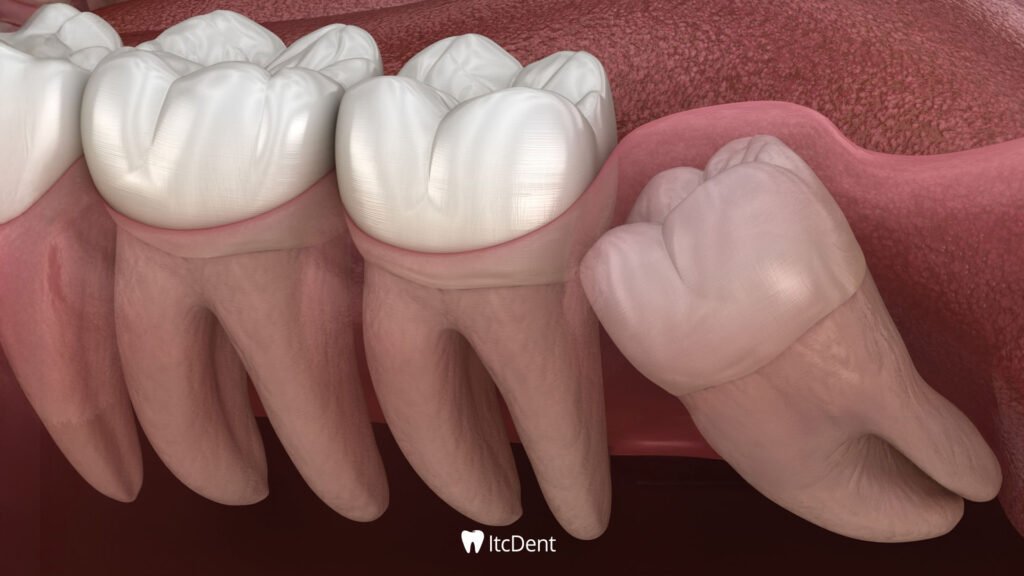
An impacted wisdom tooth is actually one of the most common problems associated with wisdom teeth. Simply put, it’s when a tooth can’t reach its intended location and becomes trapped within the gum or jawbone. The most common cause is a lack of jaw space. When a tooth can’t find room, it often leans toward the adjacent tooth or is positioned at an incorrect angle. In some cases, the gum or jawbone completely covers the tooth, preventing it from emerging.
Empty teeth can sometimes remain in this position for years without any symptoms; the person may not even be aware of it. However, the process is often less subtle. Inflammation can develop around the tooth, causing pain and swelling, restricting jaw movement, or misalignment of neighboring teeth due to pressure. Therefore, regular dental checkups are crucial for early detection of impacted wisdom teeth and preventing potential problems.

Should Wisdom Teeth Be Extracted?
The answer to whether wisdom teeth should be removed isn’t always the same; it depends entirely on the tooth’s location, how it emerged, and its impaction. If the tooth is impacted, has inflammation surrounding it, is putting pressure on adjacent teeth and disrupting alignment, or is causing pain when chewing, extraction is generally recommended. Furthermore, if the wisdom tooth’s location makes it difficult to clean and causes frequent cavities due to difficulty brushing, keeping it in the mouth can lead to more serious problems in the long run.
However, there’s no rule that says every wisdom tooth needs to be removed. If the tooth has erupted properly, contributes to chewing, and can be cleaned properly, there’s no harm in keeping it in the mouth. In some people, these teeth can survive for years without any problems. Therefore, the best decision should be made through a dentist’s examination and x-ray evaluation; every mouth is unique, and every wisdom tooth’s story is different.