
What Is Flap Surgery?
Gum problems often progress silently; they don’t always announce themselves with severe pain or sudden complaints. The faint pink foam you notice in the sink while brushing your teeth, the occasional sensitivity, or a persistent bad breath you can’t seem to get rid of… Many people overlook these small signs amid the rush of daily life. They postpone action with thoughts like “it’s probably just sensitivity,” “maybe it’s the season,” or “I brushed a bit too hard.” Yet the gums are one of the body’s clearest signal-giving areas, and these subtle warnings are often early signs of a more serious condition.
As gum disease progresses, it doesn’t only affect the gums but also the bone tissue surrounding the teeth. During this process, the gums begin to pull away from the teeth, pockets form, and bacteria quietly multiply in these areas. Even if everything looks normal from the outside, the supporting structures holding the teeth in place slowly become damaged. At this stage, simple surface cleanings are no longer enough, and a more comprehensive, targeted treatment becomes necessary.
Gum flap surgery is an effective treatment method that comes into play precisely at this point, aiming to save the teeth. This procedure allows direct access to inflamed tissues and accumulated bacteria beneath the gums. The goal is not only to clean the existing problem but also to help the gums reattach to the teeth in a healthy way and stop the progression of the disease. Although many patients see flap surgery as a “last resort,” when performed at the right time, it is actually a crucial step that prevents tooth loss and protects long-term oral health.
What Is Gum Flap Surgery?
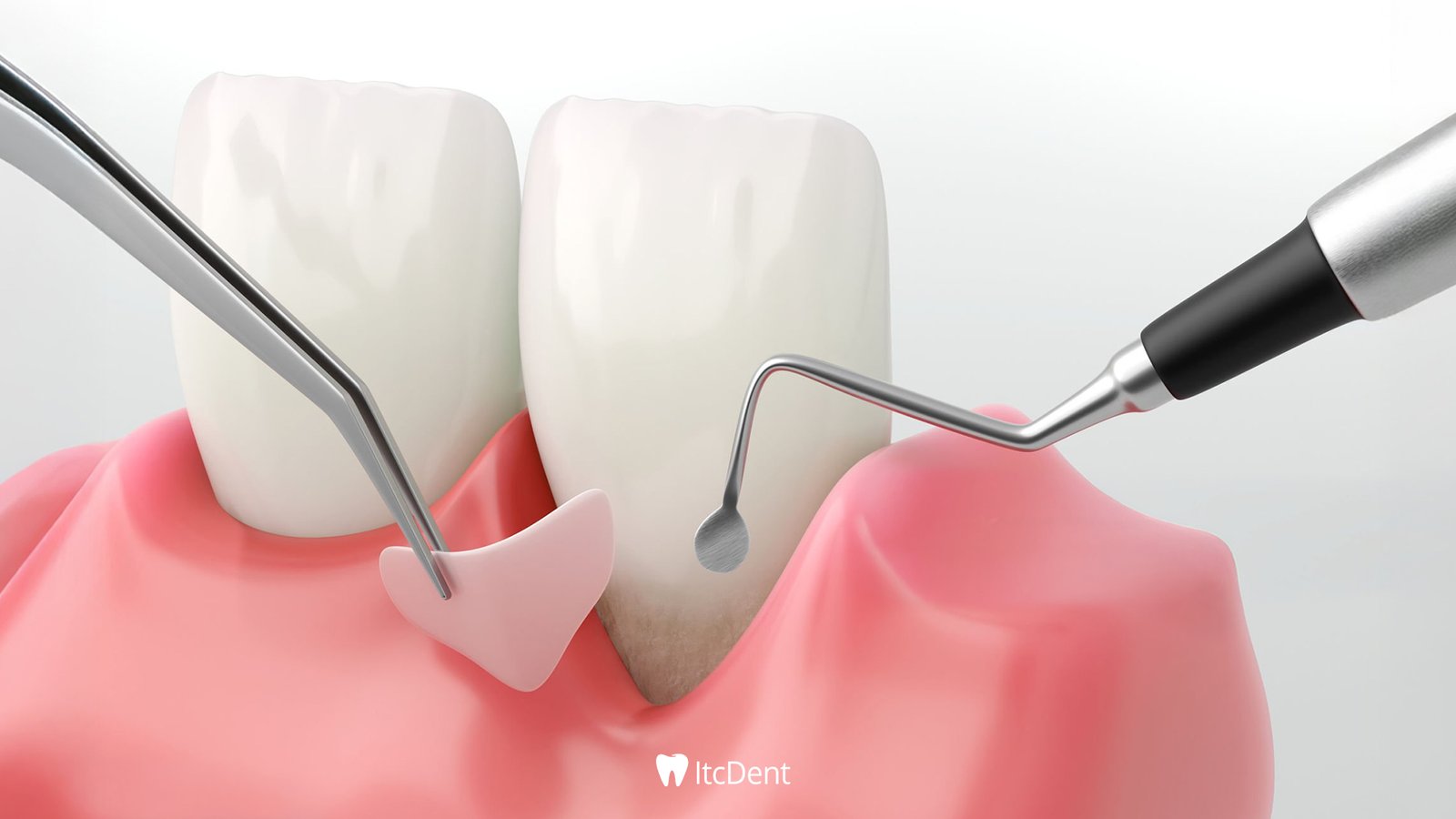
Gum flap surgery is a surgical treatment used when gum disease can no longer be controlled with surface-level cleanings. This procedure targets bacterial plaque and tartar that accumulate beneath the gums and cannot be reached through daily oral care or routine scaling. The aim is not only to remove these deposits, but also to eliminate inflamed tissue, restore the tooth roots to a healthy environment, and re-establish the natural harmony between the tooth and the gum.
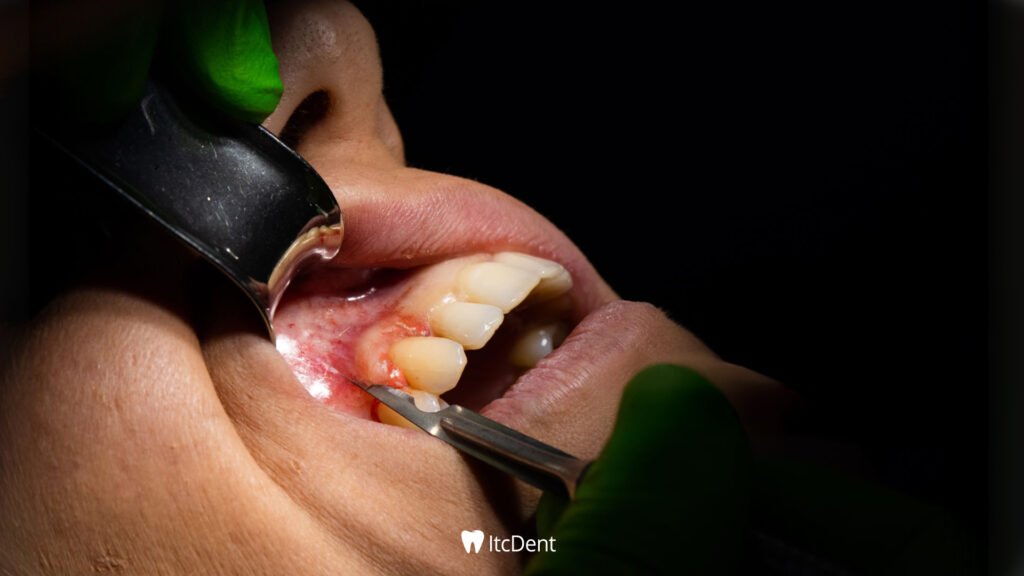
The word “flap” may sound a bit intimidating, but it actually refers to a very controlled and planned procedure. In this method, the gum tissue is not completely cut away or removed. The dentist gently lifts the gum to gain clear access to the tooth roots and bone surface. This allows direct cleaning of inflammation and hardened tartar in areas that are otherwise invisible. Once the procedure is complete, the gum is placed back into its original position and the healing process begins.
The most important difference of flap surgery is that it addresses the root cause of the problem. Instead of temporarily reducing symptoms, it aims to eliminate the factors that cause gum disease to progress. In this way, the supporting tissues around the teeth are preserved, the risk of tooth mobility decreases, and long-term tooth loss can be prevented. When applied at the right time, flap surgery becomes a strong and reliable way for many patients to regain their oral health.
Why Is Flap Surgery Necessary?
Gum diseases often begin with seemingly harmless tartar buildup. At first, these deposits may be hard to notice, but over time they progress beneath the gum line. Deep spaces, known as pockets, form between the tooth and the gum. These areas become hidden shelters where bacteria can easily multiply, unreachable by toothbrushes or dental floss. No matter how regularly you brush your teeth or even if you undergo professional cleaning, in some cases these deep pockets cannot be fully cleaned.
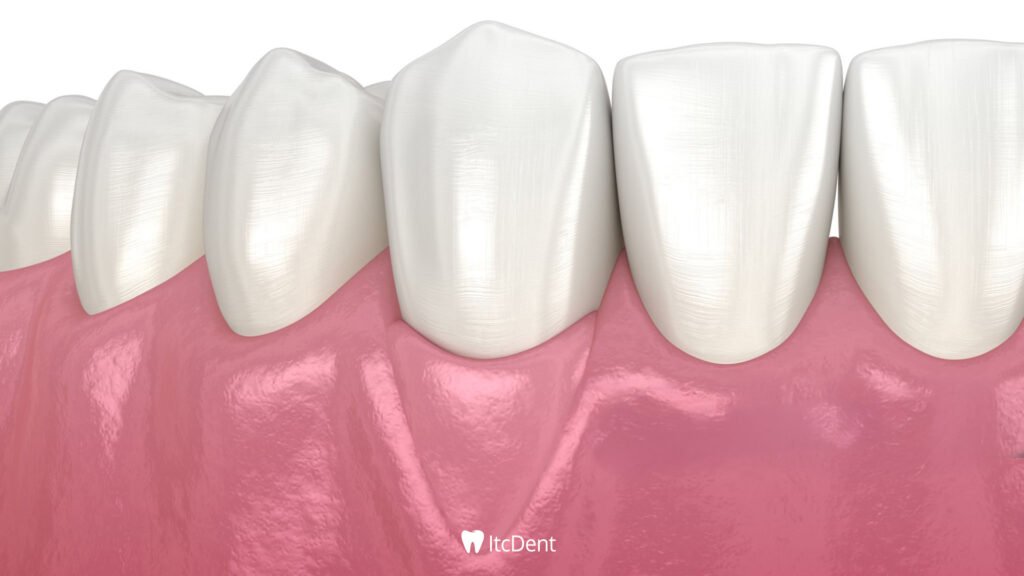
This is exactly where conventional methods fall short. If your gums bleed frequently, if the bleeding has become too persistent to explain with excuses like “I brushed too hard,” if you start to feel even slight tooth mobility, or if bad breath lingers throughout the day, the problem may no longer be on the surface but progressing beneath the gums. Especially visible gum recession is an important sign that the underlying condition needs to be taken seriously.
In such cases, we recommend flap surgery. Contrary to what many people think, the goal is not to extract the tooth. On the contrary, it is to keep the tooth healthy in the mouth by removing inflamed tissue and accumulated bacteria around it. By directly addressing the source of the problem, the gums heal, pockets shrink, and the supporting structures of the teeth are preserved.
Who Is Flap Surgery Suitable For?
Flap surgery is not a procedure that is automatically applied to everyone with gum problems. It is usually considered when gum disease has reached an advanced stage, meaning periodontitis has developed. For this reason, the answer to the question “Is it done for everyone?” is clear: No. A thorough evaluation is always required before making this decision.
First, the condition of the gums is examined in detail. The depth of gum pockets is measured using special instruments, and X-rays are used to evaluate the bone tissue surrounding the teeth. This helps determine whether the problem is limited to the surface or has progressed beneath the gums and down to the bone level. All of these assessments are essential to decide whether flap surgery is truly necessary.
In general, flap surgery becomes a suitable option when gum pockets exceed 5 mm, when bone loss around the teeth has begun, or when tartar has advanced down to the root surfaces. In addition, if inflammation has been present for a long time and cannot be controlled despite cleanings and treatments, this may indicate that the disease has become chronic.
How Is Gum Flap Surgery Performed?
First, the area to be treated is numbed. After the anesthesia is applied, the gums become completely insensitive, creating a comfortable environment for the patient. From this point on, no pain is felt, which is often the most reassuring moment for many patients.
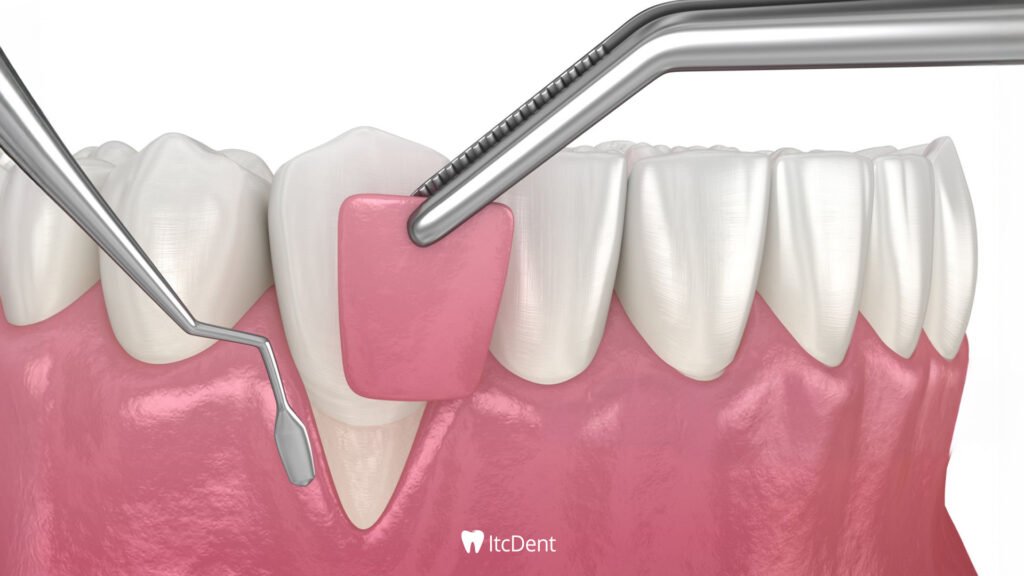
Next, the gum is gently lifted to access the tooth roots and bone surface. This step is carried out in a very controlled manner; the gum is not cut randomly or damaged. The aim is to clearly see the affected area and directly reach the hidden problem zones.
Once the gum is lifted, the deep cleaning phase begins. Hardened tartar, bacterial plaque, and inflamed tissues accumulated on the tooth roots are carefully removed. This deep cleaning targets the main factors responsible for the progression of gum disease.
In some cases, irregularities may be found on the bone surface surrounding the teeth. If this is the case, the bone tissue is gently reshaped. The purpose of this step is to allow the gum to reattach to the tooth more securely and healthily after the procedure.
After cleaning and any necessary adjustments are completed, the gum is returned to its original position and secured with fine sutures. These stitches play an important role in ensuring a smooth and healthy healing process.
The duration of the operation may vary depending on the size of the area being treated and the number of teeth involved. However, in most cases, the procedure is completed within approximately 45 minutes to 1.5 hours. With proper planning and careful execution, flap surgery is both effective and far more comfortable for patients than many expect.
Is Flap Surgery Painful?
This is one of the most common questions patients ask, and the answer is usually reassuring. No pain is felt during flap surgery because it is performed under local anesthesia. After the procedure, mild soreness, a feeling of fullness, or sensitivity may occur. These symptoms are generally easy to control with simple pain relievers. Severe or unbearable pain is not expected.
What Is the Recovery Process Like?
The period following flap surgery is just as important as the procedure itself for treatment success. In the first few days, it’s important to be gentle with the gums. Hot foods and drinks should be avoided during the first 24 hours, and hard or crusty foods should not be consumed. Smoking is strongly discouraged, as it significantly delays healing.
Taking the prescribed medications regularly and paying extra attention to oral hygiene will speed up recovery. The stitches are usually removed within 7–10 days. At the end of this period, the gums appear more settled, healthier, and pinker.
Does Gum Recession Occur After Flap Surgery?
In some patients, the gums may appear slightly more recessed after the procedure. This is because the inflamed and swollen tissue has been eliminated. In other words, this is not an actual loss, but a result of healthy healing. In the long term, the gums become stronger, more stable, and healthier.